Hooked by the Stream: Why Live Betting Broadcasts Are Turning Casual Players Into Problem Gamblers

Picture this: it's a Sunday afternoon, you've got a modest budget set aside, and you pull up a live sports betting stream just to watch the game. Twenty minutes later, you've placed six bets you didn't plan to make, the chat is exploding with takes, and you're already calculating what you'd need to break even. Sound familiar?
Live betting streams — where real-time game footage, shifting odds, and community chat all merge into one seamless experience — have quietly become one of the most powerful behavioral hooks in modern online gambling. And for a lot of casual US bettors, the shift from recreational player to compulsive gambler doesn't happen at a poker table or a slot machine. It happens in front of a stream.
The Architecture of Urgency
Traditional sports betting has natural breathing room. You pick a game, place a pre-match wager, and then wait. There's time to think, reconsider, even walk away. Live betting strips all of that out.
Odds update every few seconds. A missed field goal, a stolen base, a momentum shift — any of it can flip the board in an instant. Platforms know this, and they design the experience to keep your eyes locked and your trigger finger ready. The odds ticker moves constantly, flashing numbers that feel like they're daring you to act before the moment disappears.
This is urgency by design. Behavioral economists call it "temporal discounting" — the tendency to overvalue immediate rewards and undervalue future consequences. When a betting window flashes a juicy +280 line for the next drive and gives you 12 seconds to act, your brain doesn't have time for rational cost-benefit analysis. It just reacts.
For casual bettors who came in with a $50 budget and a "just for fun" mindset, that architecture can be genuinely dangerous.
The Chat Room Amplifier
If the live odds are the engine, the chat community is the turbocharger.
Most major live betting streams — whether on dedicated sportsbook platforms or adjacent content on Twitch and YouTube — come with active chat sections where hundreds or thousands of viewers are reacting in real time. And those chats aren't neutral spaces. They're high-energy, emotionally charged environments where FOMO spreads like wildfire.
Someone hits a parlay. The chat erupts. Rocket emojis, "LFG," screenshots of winning tickets. For someone sitting on the fence about making a bet, that social validation is a massive nudge. Nobody wants to be the person who watched from the sidelines while everyone else cashed out.
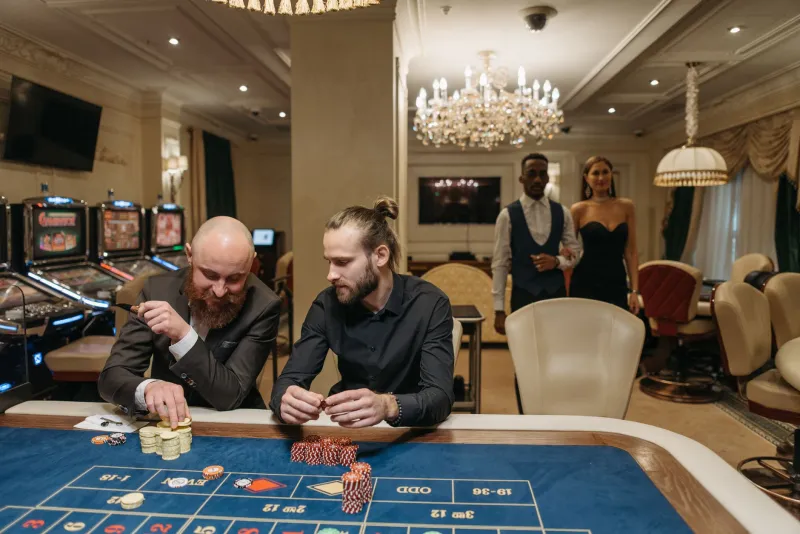
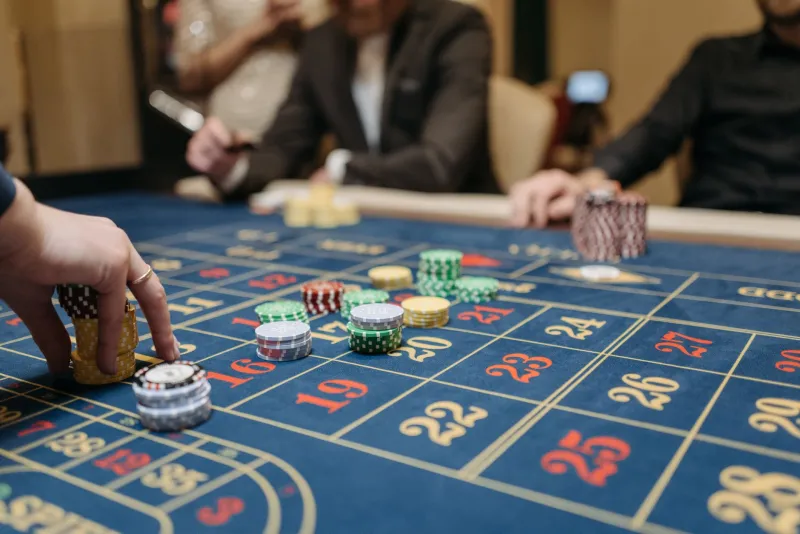
Researchers who study social gambling behavior have noted that community-based betting environments dramatically increase impulsive wagering. The effect is similar to what casinos create on their floor — surrounding you with the sights and sounds of other people winning — except online streams do it at scale, 24/7, from your couch.
The flip side? When bets go bad, the chat often minimizes the loss. "Shake it off, bro." "Easy bounce back." "That pick was rigged anyway." That kind of instant emotional support, however well-intentioned, can normalize chasing losses in ways that a solo bettor sitting alone with their thoughts might not experience.
FOMO as a Business Model
Fear of missing out isn't just a social media phenomenon — it's a core mechanic in live betting platform design.
Platforms push notifications for "boosted live odds" during big moments. Streamers shout out time-limited promotions mid-broadcast. The chat buzzes with picks that are supposedly "printing money right now." Every element of the experience is calibrated to make you feel like opportunity is constantly slipping through your fingers.
This is particularly effective on younger US bettors, especially in the 21-35 demographic that grew up with social media and is already primed to respond to FOMO triggers. The crossover between sports fandom culture, streaming culture, and sports betting has created an audience that's especially vulnerable to this kind of pressure — not because they're reckless, but because the format is engineered to exploit the same psychological levers that keep people scrolling Instagram at 2 a.m.
Make no mistake: the platforms aren't doing anything illegal. But the convergence of real-time data, social community, and instant transaction capability creates a uniquely sticky environment that traditional gambling regulation wasn't designed to address.
What Makes This Different From Regular Casino Play
Slot machines get a bad reputation — and fairly so — for their fast feedback loops and hypnotic design. But even slots have a rhythm. You spin, you wait, you see the result. There's a defined cycle.
Live betting streams don't have a cycle. They're continuous. A game lasts three hours, and within those three hours there are dozens of micro-markets: next possession, next quarter, next at-bat. Each one is a new opportunity to bet, win, lose, and bet again. The session never really ends until you close the browser — and closing the browser feels like leaving money on the table when the chat is still going crazy.
Compare that to walking out of a casino. There's a physical act, a threshold you cross. Online, there's no equivalent friction. The stream keeps running whether you're betting or not, which makes "just watching" feel like a waste.
For people who already have tendencies toward compulsive gambling, this format removes almost every natural stopping point.
Protecting Yourself Without Giving Up the Fun
None of this means live betting streams are inherently evil or that you should swear them off entirely. Plenty of people engage with them responsibly and have a blast doing it. But going in without awareness of the mechanics is like walking into a casino without a budget — you're setting yourself up to be played by the house.
A few habits that actually help:
Set a session budget before you open the stream. Not a daily budget, not a weekly budget — a specific dollar amount for that specific session. When it's gone, the stream closes.
Mute the chat during close decisions. Seriously. The chat is designed to create social pressure. When you're deciding whether to bet, remove that variable entirely.
Use time limits, not just money limits. Some platforms let you set session time reminders. Use them. Time flies in a live stream environment in ways that are genuinely disorienting.
Give yourself a mandatory pause after a loss. Before you place the next bet, stand up, get a glass of water, take two minutes away from the screen. That's usually enough to break the chasing impulse.
Recognize the difference between watching and betting. You're allowed to enjoy the stream without having action on every play. That sounds obvious, but the platform design works hard to make you forget it.
The Bottom Line
Live betting streams represent a genuine evolution in how people engage with online gambling — and not entirely for the better. The combination of real-time odds, social community dynamics, and FOMO-driven design creates an environment that's qualitatively more intense than traditional casino games or pre-match sports betting.
Being aware of that isn't being a buzzkill. It's being a smarter player. At SuperMoney88, we believe the best bettors are informed bettors — people who understand the game they're actually playing, not just the one on the screen. Know the mechanics, set your limits, and you can enjoy the stream without letting the stream run you.